Every Southern town argues about fried chicken, and Clover is no exception, but the method underneath the arguments barely changes. Great fried chicken, the kind a restaurant like Clover Station builds its name on, is a chain of steps: salt early, season the flour, keep the coating dry, fry at a steady heat, and rest the chicken before it is eaten. Skip a link and the chain still holds together, mostly. Skip two and you get the soggy, bland chicken that gives the dish a bad name in lesser kitchens.
This is the method as Southern cooks practice it, written out so a home cook in Clover can follow it and a restaurant guest can understand what they are eating.
The steps, in order
- Salt or brine first. Chicken gets salt hours ahead, or a soak in seasoned buttermilk, so the meat itself is seasoned and stays juicy in the fryer.
- Season the flour, not just the chicken. The dredging flour carries salt, pepper, paprika, and garlic or onion powder, so the crust has flavor of its own.
- Coat and let it sit. Dredged pieces rest ten to fifteen minutes so the coating hydrates and sticks instead of shedding in the oil.
- Fry at steady heat. Oil around 325 to 350 degrees, in a heavy skillet or fryer, with room between pieces so the temperature does not crash.
- Turn once, drain well. Pieces turn a single time, cook to a deep golden brown, and drain on a rack so the crust stays crisp instead of steaming.
- Rest before serving. A few minutes of rest lets the juices settle and the crust set. Chicken rushed to the plate sweats its own coating soft.
Each step defends the crust. The pre-salting seasons the meat so the coating does not have to do all the work. The rest after dredging is the one home cooks skip most often, and it is the difference between a crust that clings and a crust that slides off in one sheet at the first bite. The rack matters for the same reason a paper towel fails: chicken sitting in its own steam goes soft from underneath, and the bottom of the piece is where sogginess starts.
Cast iron and the oil question
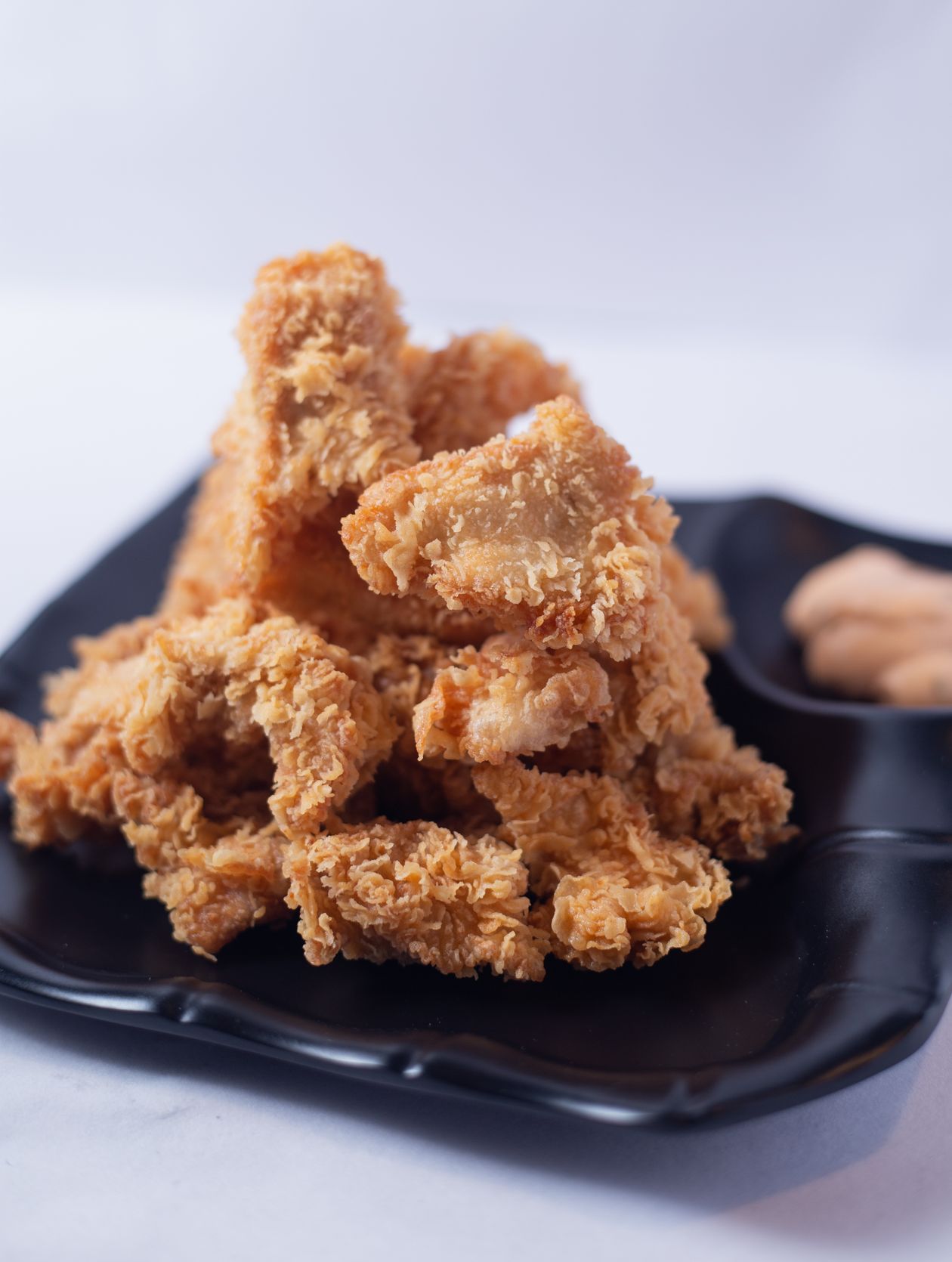
The traditional vessel is a cast iron skillet, filled about a third deep, and it persists because heavy iron holds heat when cold chicken goes in. Deep fryers do the same job with a thermostat. What matters is not the vessel but the recovery: oil temperature drops when food enters, and a heavy pan or a strong burner brings it back fast. Crowding is the enemy. Four pieces in a skillet that fits six is fine; six pieces means the oil cools, the coating drinks grease instead of crisping, and the chicken steams itself.
As for the oil, Southern kitchens historically used lard or shortening, and many still swear by them. Modern peanut and vegetable oils fry cleaner and are what most restaurants use today. The honest answer is that technique outweighs the choice: properly heated oil of any common kind produces crisp chicken, and badly managed oil of the finest kind produces a greasy one.
How to judge a plate of it
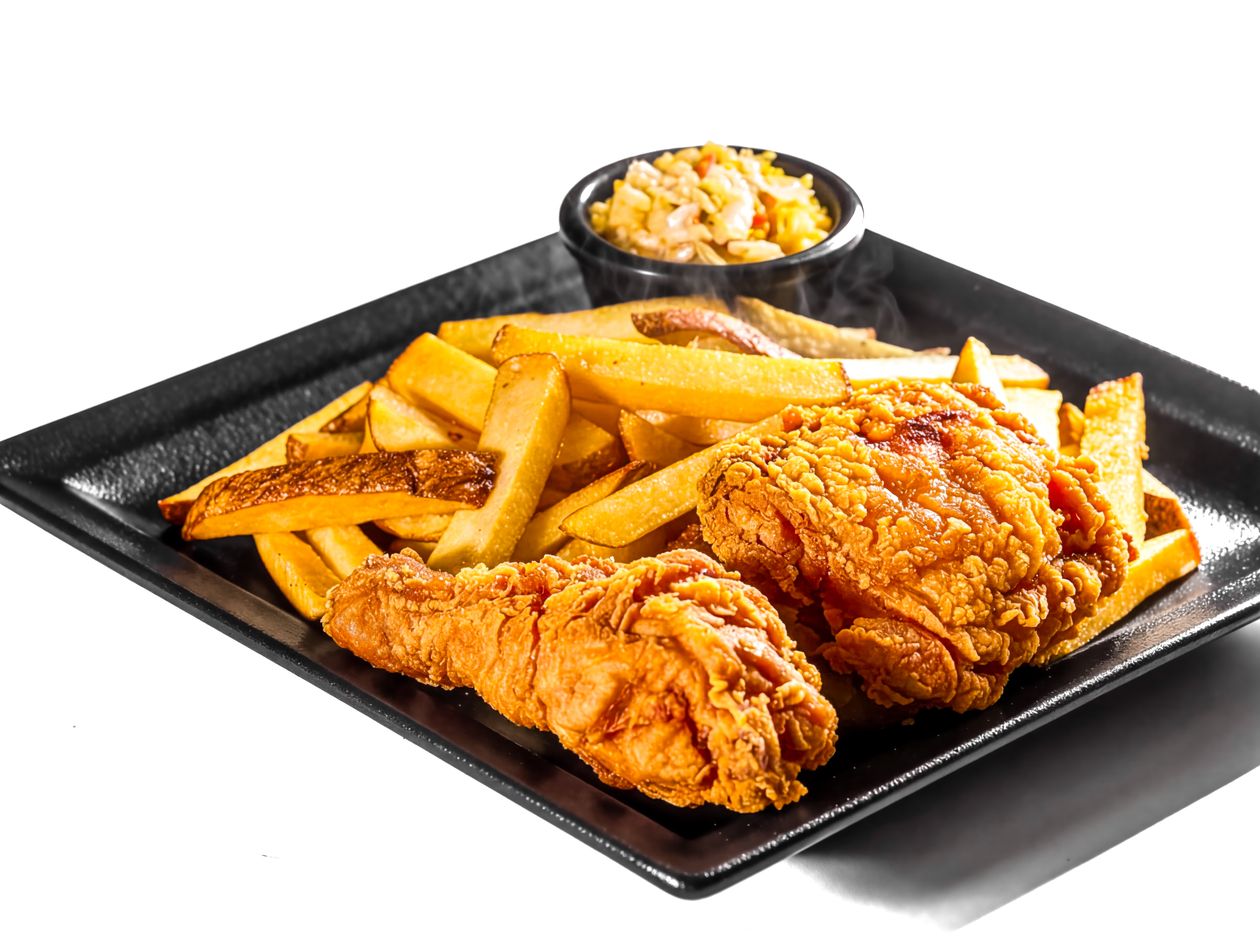
You can grade fried chicken in the first thirty seconds. The crust should be an even deep gold, dry to the touch, and audibly crisp when a fork goes in. The meat at the bone should be juicy, and the seasoning should reach it, which tells you the kitchen salted early. A pale crust means cool oil. A dark, hard crust with dry meat means the oil ran hot and the pieces were large. Restaurants that fry all day develop the consistency that home cooks, frying twice a month, have to work for, and that consistency, more than any secret ingredient, is what people are tasting when they say a place has the best chicken around.
Leftovers and reheating, honestly
Fried chicken is one of the few fried foods with a real second life. Eaten cold, straight from the refrigerator, it is a Southern picnic staple and some people prefer it that way. Reheated, it wants a hot oven and a rack, not a microwave, which steams the crust soft in under a minute. Ten to fifteen minutes in a hot oven brings most of the crisp back, because the coating re-fries gently in its own seasoned fat.
It also helps to know what not to reheat: chicken that sat out for hours at room temperature should be discarded, whatever it cost, because fried food at a picnic is a food-safety clock like any other. Refrigerated promptly, though, a leftover piece or two is a cook's reward, and generations of Southern families have planned Sunday frying quantities with Monday's cold chicken in mind.
Common questions
Why does the coating fall off fried chicken?
Usually the dredged chicken went straight into the oil. Letting coated pieces rest about fifteen minutes hydrates the flour so it bonds to the skin.
What oil temperature is right for frying chicken?
Most cooks hold the oil between 325 and 350 degrees. Much cooler and the crust absorbs grease; much hotter and it browns before the meat cooks through.
Should fried chicken rest after cooking?
Yes, a few minutes on a rack. Resting sets the crust and lets juices redistribute, and the rack keeps the bottom from steaming soft.
Photos in this guide are representative stock images.
← All guides from Clover Station← Back to Clover Station